morePlatz
projects / office / publications / contact

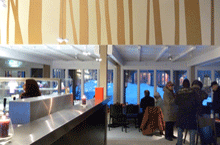
Café Eisenmann

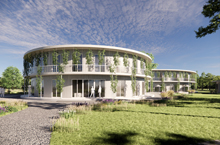
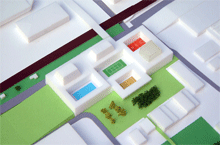
The Bavarian National Forest is Germany’s first National Park. It was found in 1970 and represents a regional attraction and important economic factor for the whole area with more than 700.000 visitors per year.
Since the fall of the ‘Iron Curtain’ the region is witnessing a continuous upswing – being shifted from a former fringe to a central position in Europe. Due to the National Park’s 40th anniversary the visitors’ center in Neuschönau is refurbished and extended.

The Future of Tradition

In 1910, a one-off and never to be repeated event took place at Munich’s exhibition grounds, known today as Theresienhöhe. With nearly 3,600 exhibits arranged in 80 rooms, the show presented and acknowledged the entire spectrum of the Islamic world’s visual culture. This exhibition set new standards for the reception and research of Islamic art in the West.

Baugespann

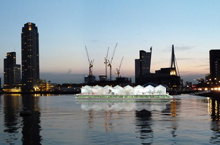
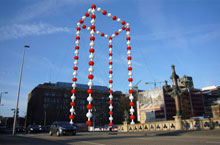
‚Baugespann‘ visualizes the future development in the Wineharbour Rotterdam.
The inflated balloon-structure marks the planned tower ‚100 high‘ at the corner Wijnstraat-Posthornstraat in scale 1:1.
An array of helium filled balloons are tacked up along four inflated columns as pearls on a necklace. One balloon per floor outlines the envelop of the future volume - the structure visualizes the building right at its original location.

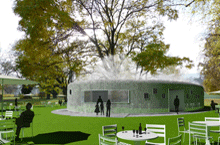
The new kiosk building for the bath 'Mythenquai' preserves the spacious lawn with solitary trees along the shore. The impressive landscape of the lake of Zurich is even enhanced - 'Fountain' is placed exactly at the same spot as the former kiosk.
The vicinity to the shore but still central position is advantageous and takes into account the usage of customers throughout decennia. The new pavilion is fit into the center of the altered path system, that links the relevant elements of the site and guarantees optimal accessibility.

Maxinquay

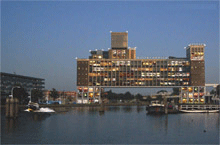
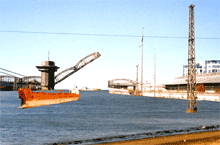
In the 60’s and 70’s harbour areas and their waterfronts were not much appreciated in many european cities. They were neglected and considered problematic.
Quite often they were cut off from the city’s most frequented neighborhoods by vast infrastructural bodies and douane barriers.
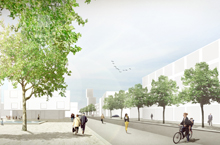
Today – due to re-location and modernization of harbor activities - these areas offer great opportunities for development of new neighborhoods.

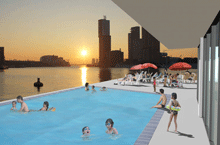
Nieuw Amsterdam

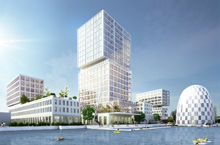
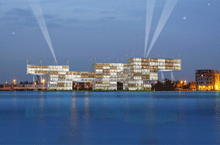
The concept for the project is based on the historic link between Manhattan and Amsterdam. Manhattan’s very beginning, its urban development and its programmatic richness serve as a reference on three levels.
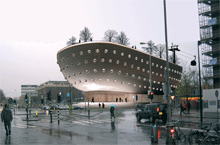
The paradoxical task of creating an ‘Open Fort’ leads to an elevated structure that is bold and emblematic but at the same time allowing for maximum accessibility of the IJ-oevers and visual connections with the city centre of Amsterdam across the river.

Amsterdam aan Zee

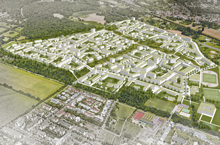
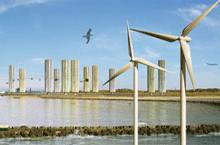
According to the Dutch policy plan Randstad 2040, there will be an enormous need for new housing in the west of the country. At the same time, the endless suburbanization and loss of natural resorts and agricultural areas has to be opposed.
New developpments should be dense and vital and have to suffice to sustainable demands for energy consumption, social cohesion and mobility.

Ijdoornlaan

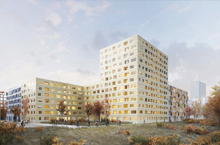
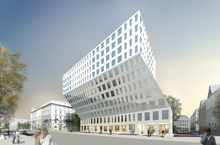
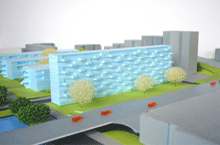
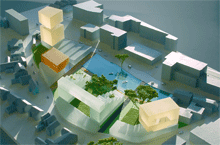
In the wake of the urban development 'CAN' Centrum Amsterdam North - with 3.300 houses, social and cultural programm, a new shopping center, sports club and metro connection - an upgrade of the whole Buikslotermeerplein area is expected.
The adjacent apartment buildings at the Ijdoornlaan - four identical flats of 160 units - are in poor condition and a renovation seems not profitable.

Lehmkuhl

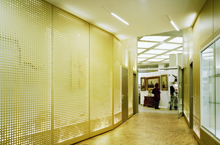
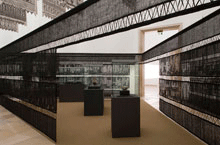
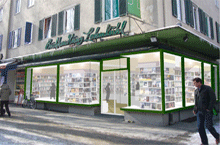
The essence of the refurbishment of the bookshop 'Lehmkuhl' in Munich is to achieve a clear spatial overview - a 'room made of books' - that allows a distinguished zoning. The continuous profile along the wall elevations guarantees a maximum display.
The combination of two prototypes of shelves creates an optimized corner detail that continuously folds around each corner, column and wall recess and maximizes the total shelf length to a 1000 m.

Eco City

Following the succesfull concept of the existing farm in Belbeis, Sekem is planning a large scale extensions of around 930 ha in the Oasis Wahat. Next to the irrigation and conversion of the desert soil into fertile farmland, the so-called ‘ECO CITY’ project comprises the construction of buildings for housing, production, education and culture.

Guesthouse

The Sekem Farm was founded in 1977 by Dr Ibrahim Abouleish on an untouched part of the desert in an area 60 kilometers northwest of Cairo. Over the years, Sekem became a multifaceted agro-industrial group of business companies specialized in organic products.
European guests visiting the farm are so far hosted in the famous ‘Roundhouse’, the initial adobe building constructed 30 years ago. As the international reputation of Sekem attracts more and more visitors, a new guesthouse with 20 rooms, a lobby, restaurant and kitchen is required.

Umi

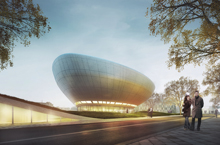
The design of the new Estonian Art Academy is conceived as a voided tower. The faculties are arranged along a single loaded hallway opening up to a large communal space. Its conical shape receives top-light to the very centre of the academy.
The building is interpreted as a metaphor - a very large telescope, a giant camera obscura, a pinhole to the sky.

Rive Gauche

Rive Gauche creates new relations and activities between the low-profile residential neighborhood of Spangen the Van Nelle Design Factory and the adjacent districts. Spangen is circumscribed by infrastructural boundaries and a wide canal - the Delfshavense Schie which is the focus of this project. The proposed interventions activate the banks of the canal, they establish new links and a residential building across the canal. They introduce public neighborhood-oriented functions in the up to now fenced-off Van Nelle terrain.

Hafen Münjing

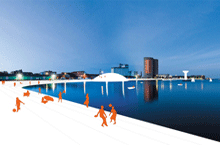
Münjing presents Munich's new infrastructural link to the Mediterranean. The direct connection to the Adria across the Alps sets free the sentiments of 'Fernweh' and the dynamics of harbourcities right in the center of the Bavarian capital. The initial project is realized at the Stachus... Münjing is a collaboration of morePlatz, PAM and Bunnyhill.

Gondelpark

What could a place like Mr. Visserplein offer to a city? Mr. Visserplein is a somewhat confusing traffic junction of five roads and a tram-line. Nevertheless its interiour created space for an underground program of unexpected playfulness and it gave the actual shape to the encircled island of the square: the shape of a stadium.

Compound

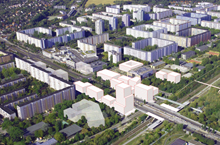
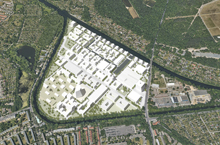
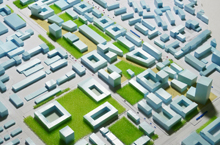
Compound = heterogeneous elements combined to form a new entity. The specific condition of the site in Enschede is the confrontation of the existing low rise residential area with the future vision of massive, urban highrise structures along the railway tracks.

Le Bloq Sportif

The site of Malley represents a truly interior situation of Lausanne. It is a flat piece of land, that is sunk into the ground between roads and rails. It is lacking topography and the magnificent view over the lake Geneva into the Alps. Its vast, yet enclosed character attracts large scale buildings and space consuming, semi-industrial programme.

Spark

Angular remnants of ground are left over where the HSL South line curves away from the Schiphol line. Surrounded by dynamic infrastructure, the site forms a secluded enclave - an island cut out of the scenery - that is yet highly exposed to the vision of thousands of travelers passing by.

Citybranding

The reflection on Citybranding reveals an actual conflict of nowadays cities’ realities. Both cities, Amersfoort and Breda, have been developing rapidly over the past 20 years. The growth in scale and the altered relations with the surroundings form a new context in which the role of the historic centre as the one provider of identity is not sufficient anymore.

The Mobile City

The new spaces of the city are no longer composed of buildings and facades. Transformed data is streaming homogeneously through space and forming global connections. The city is the whole earth and all the cities are one city. A coherent network of mondial exchange is maintained by the inhabitants of its multilocal center.

Siedlung

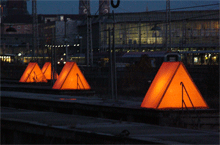
West of Munich’s Central Station there’s a particular space. Secluded urban void located in the citie’s very center. An empty field of rails and electricity lines providing routes and destinations. It is bordered by discarded cargo facilities and rails, interlocking like fjords.

Glowing industries

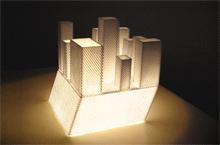
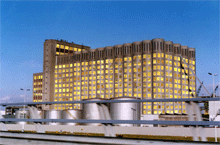
Glowing industries‘ proposes to inhabit the interior spaces of large industrial structures. The rough beauty hidden in these megasculptures ignites the wish of appropriating, colonizing and possessing. An aesthetic strength shimmers through the volumes‘ surfaces, shaped and designed by nothing else but functional means.

Bago

The ‚Institut für Bagonalismus‘ was founded by Prof. Nicolai Sarafov in 1986 in Munich. *Bagonalismus is a neologism he invented to label his project. The Institute publishes an occasional magazine of graphic art, free lance contributions and an ongoing anthology of definitions of bago. Collecting these items together with the stuff related to it, the institute builds up the need of a library of its own.

Public Address

The site of the Sarajevo Concert Hall is surrounded by different urban structures: the tall solitaire buildings of parliament, government and UNIS towers, that form a gateway to the older parts of the town, dominate the area adjoining west of Vrbanja Road.

Raumkurorte

Spatial spas are bifurcations of the mobile reserved place and the layers in front and behind of it. They are subjective maps. They describe ubiquitous conditions and categories of the city, from which one is composing one’s own city - universal map of internal cities. These undetected more-world trips facilitate further education and help tracing out the right way to the right place in the nomadic world.

more Platz

The videofilm ’more Platz‘ accompanies our agency for mobile, reserved places at its conceptual and actual work - in the office, in the city and its surroundings. The agency‘s concern is to reflect on space in general and on the everyday usage of the enormous potentials of available spaces.The infinite possibilities of the ‚wide and undefined‘ and the interrelations of location, event and time determine the ’more‘ view.

From Inside To Outside

The project focuses on the dynamic process of spatial and social changes in the region of Weimar - Erfurt after the German Reunion in 1989. Formerly derelict GDR borderland, now central in Mid Europe and Germany,the region is facing uncontrolled development of enormous extent. The country‘s inner order was substituted by another operating system. Together with the impact of economic cravings this released a wave of newness which set the whole region in motion - transforming its surface appearance.

HKW Süd

By superimposing aspects from James Joyces ‘Ulysses’ on the site of Munich‘s powerplant ‚HKW Süd‘, dense urban life, multilayered complexity and heterogenity is generated. James Joyce: «I always write about Dublin, because if I can get to the heart of Dublin, I can get to the hearts of all the cities in the world. In the particular is contained the universal.»

Ormea

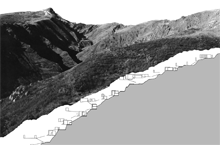
A secluded slope in the Italian Sea-Alps forms the background scenery for a place where filmstudents, directors, scriptwriters, cameramen and actors get together to learn, teach and work. The analysis of Federico Fellinis movie «8 1/2» shows the scenes and their duration, the performing characters in relation to the protagonist and the differentiation between dream and reality. Projected onto the site, the 3D graphic forms the spatial framework for the academy buildings.

 
morePlatz / Schiekade 189, unit 412 / NL - 3013 BR Rotterdam / +31 - (0)10 - 714 2699 / office@moreplatz.com / www.moreplatz.com © 2011 All Rights Reserved